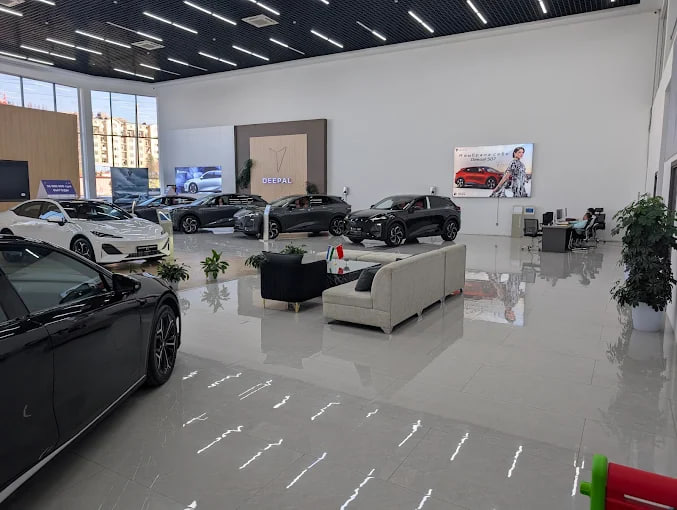
When investing in modern new energy vehicles, long-term operational efficiency and climate adaptability matter just as much as styling and technology. Uzbekistan’s distinct continental climate — featuring summer heat above +40°C, bustling urban traffic in Tashkent, and vast highway distances — demands robust vehicle engineering. Range-extended electric vehicles (EREVs) and PHEVs from Changan and Deepal are specifically engineered to thrive in these demanding conditions.
This operational guide covers essential battery management techniques, daily charging routines, and practical maintenance tips for hybrid owners across the region.
1. Battery Thermal Management in Extreme Summer Heat
Battery longevity under intense sun is a primary consideration for prospective owners. Deepal S07, SL03, G318, and Changan Nevo series utilize active liquid thermal management loops:
- Smart Thermal Regulation: The battery management system monitors individual cell temperatures around the clock, initiating active cooling cycles even when the car is parked and powered off.
- Ideal Temperature Range: Battery cells are consistently maintained between +20°C and +35°C, preventing cell stress and thermal degradation.
- Practical Recommendation: Use the dedicated smartphone app to pre-cool the vehicle cabin 10 minutes prior to departure while plugged in. This ensures maximum electric range remains intact for the road.
2. Home Charging vs Public Charging Stations in Tashkent
The core advantage of EREV technology is independence from public high-speed DC charging corridors. With a full tank, you can comfortably travel over 1,000 km. However, for everyday city commuting, grid charging remains the most cost-effective solution:
- Standard 220V AC Home Charging: Using the bundled portable charging unit, the battery reaches full charge overnight (7–9 hours) on economical night-time utility rates, supplying up to 200 km of city travel.
- Dedicated 7 kW Wallbox Units: Installing a wallbox at home or private office parking reduces full charging cycles down to 3–4 hours.
Cost Comparison: Conventional 2.0L Petrol vs EREV Hybrid (per 10,000 km)
| Metric | Conventional 2.0L Petrol Crossover | Deepal S07 / Nevo (City Commute) |
|---|---|---|
| Average Consumption / 100 km | 10–12 Liters (Octane 95) | 15–18 kWh (Pure EV) or ~4.5 L (Hybrid mode) |
| Daily Electric Range | 0 km | Up to 150–215 km |
| Fuel Station Reliance | Frequent visits | Negligible for urban commuting |
| Brake Pad Replacement | Every 20,000–30,000 km | Up to 2x longer life (due to regenerative braking) |
3. Maintenance Best Practices for Hybrid Powertrains
Because the internal combustion engine operates smoothly as an on-demand generator rather than under harsh mechanical drivetrain strain, routine servicing remains straightforward:
- Engine oil and filter intervals are calculated primarily based on the actual operating hours of the range extender.
- Regenerative braking handles primary deceleration, recapturing energy into the battery pack while preserving brake rotors and pads.
- Periodic cooling fluid checks, high-voltage insulation tests, and electronic firmware updates are carried out via factory scanners at authorized dealerships.
Routine service at the authorized Changan center in Tashkent preserves complete factory warranty coverage on all drive units and high-voltage battery packs.
